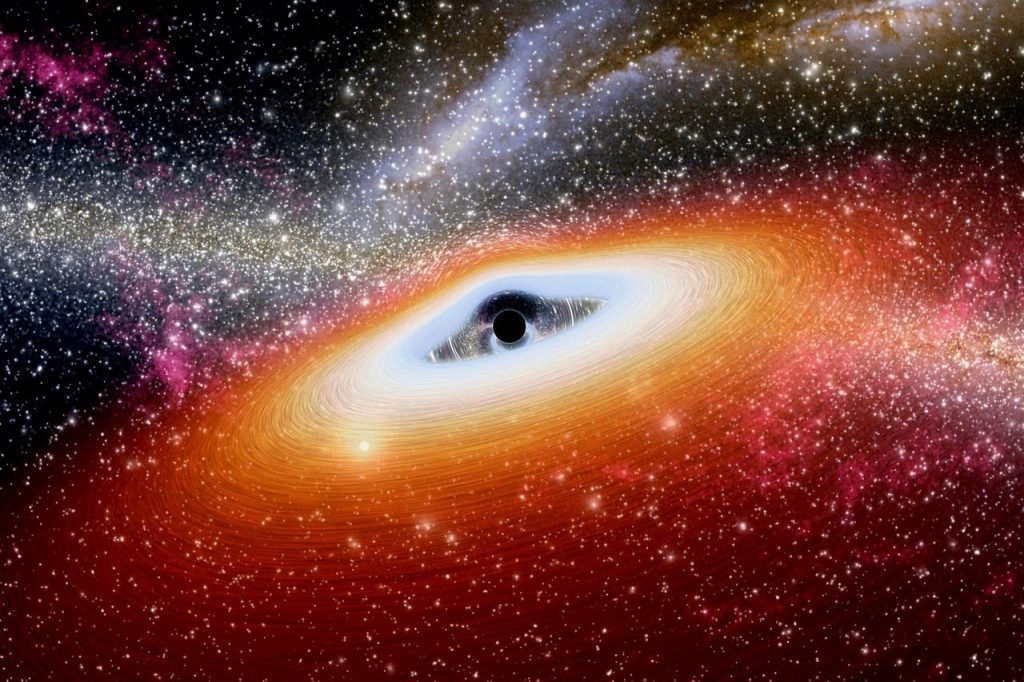
Ever wondered how scientists capture images of supermassive black holes lurking at the centers of galaxies? With the advent of advanced imaging techniques, we’ve made significant strides in observing these fascinating cosmic phenomena. In this article, we’ll explore five revolutionary methods that shed light on elusive black hole shadows, making complex concepts accessible and thrilling.
From Event Horizon Telescope to advanced computational techniques, we’ll unveil how each method contributes to our understanding of the universe. Get ready to dive deep into the cutting-edge world of astrophysics!
1. Event Horizon Telescope (EHT) – Best for Global Multi-Observation
The Event Horizon Telescope is a groundbreaking global network of radio telescopes that provides unprecedented views of black hole shadows. By combining data from multiple observatories across the world, EHT succeeded in capturing the first-ever image of a black hole in 2019.
Key Features:
- Global array of radio telescopes
- High-resolution imaging capabilities
- First image of the supermassive black hole in M87
Pros:
- Revolutionized our understanding of black holes
- Collaborative effort among global scientists
- Exceptional detail in imaging
Cons:
- Requires precise alignment of telescopes
- Data processing is time-consuming
- Expensive infrastructure and technology
2. Polarimetric Imaging – Best for Magnetic Field Mapping
Polarimetric imaging stands as a novel technique to analyze the light emitted from matter around black holes, revealing their magnetic fields. This method offers insights into the behavior of surrounding matter and how magnetic forces influence black hole dynamics.
Key Features:
- Measures light polarization
- Reconstructs magnetic field lines
- Enhances understanding of accretion processes
Pros:
- Illuminates magnetic field structures
- Aids in explaining high-energy phenomena
- Non-invasive observation technique
Cons:
- Requires sophisticated instruments
- Time-intensive data analysis
- Plausibility dependent on location
3. Very Long Baseline Interferometry (VLBI) – Best for High-Resolution Imaging
VLBI is a powerful technique that combines observations from multiple radio telescopes located thousands of kilometers apart. This method significantly enhances the resolution of images, allowing scientists to observe black hole shadows with remarkable detail.
Key Features:
- Combines data from widely spaced antennas
- Achieves resolutions surpassing ordinary telescopes
- Effective for tracking movement around black holes
Pros:
- Highly detailed images
- Useful for studying dynamic systems
- Can reveal rapid changes in black hole environments
Cons:
- Requires extensive coordination
- High operational costs
- Complex data synchronization
4. X-ray Imaging – Best for High-Energy Observations
X-ray imaging is ideal for observing high-energy processes near black holes. X-ray telescopes capture light from heated gas spiraling into the black hole, providing invaluable information about its accretion disk and event horizon.
Key Features:
- Utilizes powerful X-ray satellites
- Detects high-energy emissions
- Offers insights into accretion dynamics
Pros:
- Effective for studying energetic phenomena
- Can detect emissions from distant black holes
- Improves understanding of black hole growth
Cons:
- Requires space-based telescopes
- Limited by atmospheric interference
- Complex handling of data
5. Machine Learning Algorithms – Best for Data Analysis Improvements
Machine learning algorithms are transforming the field of astrophysics by analyzing vast amounts of data to enhance image reconstruction. These techniques allow for more accurate modeling and prediction of black hole shadows based on existing data.
Key Features:
- Automates data processing
- Improves image resolution and quality
- Identifies patterns in complex datasets
Pros:
- Speeds up data analysis
- Increases accuracy of reconstructions
- Facilitates handling of large datasets
Cons:
- Requires substantial training data
- Possible overfitting issues
- Dependence on algorithm quality
How to Choose the Right Technique
When deliberating on the best imaging technique for studying supermassive black holes, consider factors like the specific observations desired, available technology, and research goals. Each method has unique advantages that can enhance your understanding of these cosmic giants. Always stay updated with advancements in astrophysics and imaging technology to make informed choices!
#BlackHoles #Astrophysics #ImagingTechniques #SpaceScience #CosmicPhenomena #EventHorizon #AstroPhotography #DataScience