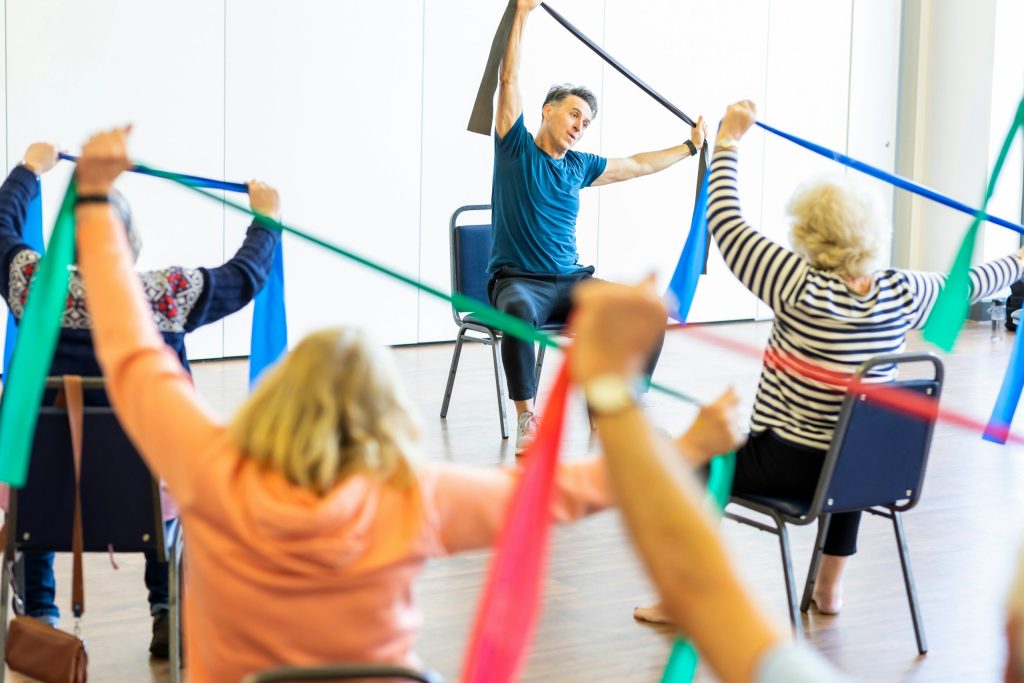
As we age, maintaining independence becomes increasingly important, and staying active is key to achieving that goal. With the right exercises tailored for seniors, you can boost your strength, balance, and overall health, making daily activities easier and more enjoyable.
In this list, we’ll explore the top ten exercises perfect for seniors looking to enhance their physical fitness and retain their autonomy. Let’s dive in and get moving!
1. Chair Yoga – Best for Flexibility and Relaxation
Chair yoga is a gentle way to stretch and improve flexibility without requiring the ability to get up and down from the floor. It’s excellent for both physical benefits and relaxation.
Key Features:
- Low-impact and accessible for all fitness levels
- Improves flexibility and joint health
- Encourages mindfulness and relaxation
Pros:
- Can be done anywhere with a chair
- Reduces stress levels
- Promotes better posture
Cons:
- May not provide as intense a workout
- Class availability may vary
2. Walking – Best for Cardiovascular Health
Simple yet effective, walking is a low-impact exercise that promotes cardiovascular health. It can be done anywhere and at any pace, making it ideal for seniors.
Key Features:
- Enhances cardiovascular fitness
- Boosts mood and mental well-being
- Requires no special equipment
Pros:
- Can be done alone or with others
- Easy to modify pace and duration
- Promotes social interaction if done in groups
Cons:
- Weather dependent if outdoors
- May require supportive footwear
3. Water Aerobics – Best for Joint Health
Water aerobics is a fantastic option for seniors, especially those with arthritis or joint pain. The buoyancy of water reduces strain while providing resistance.
Key Features:
- Low-impact exercise
- Improves strength and endurance
- Offers a cool and refreshing environment
Pros:
- Very gentle on the joints
- Great for socializing in a class
- Variety of workouts available
Cons:
- Requires access to a pool
- May need to take classes to learn proper techniques
4. Strength Training – Best for Muscle Retention
Strength training can help combat age-related muscle loss. Using light weights or resistance bands, seniors can build and maintain muscle mass safely.
Key Features:
- Supports bone density
- Enhances balance and coordination
- Improves daily functional movements
Pros:
- Can be adjusted to individual fitness levels
- Promotes healthy metabolism
- Strengthens muscles without heavy impact
Cons:
- Requires proper guidance to avoid injury
- May need equipment or bands
5. Tai Chi – Best for Balance and Stability
Tai Chi is a form of martial art known for its slow, graceful movements. It’s excellent for improving balance and reducing the risk of falls.
Key Features:
- Promotes stability and coordination
- Enhances mental focus and relaxation
- Gentle on the body
Pros:
- Can be practiced indoors or outdoors
- Suitable for all fitness levels
- Encourages mindfulness
Cons:
- Takes time to master the movements
- Requires regular practice for benefits
6. Dancing – Best for Social Engagement
Dancing is not only a fun activity but also an excellent form of exercise that improves coordination and cardiovascular health while promoting social interaction.
Key Features:
- Enhances mood and mental health
- Increases flexibility and stamina
- Can be done alone or in groups
Pros:
- Boosts energy and reduces stress
- Accessible for all skill levels
- Can be adapted for different music styles
Cons:
- May require a partner for some styles
- Not ideal for those with limited mobility
7. Pilates – Best for Core Strength
Pilates focuses on strengthening the core muscles, which is crucial for balance and stability. It’s a great way to enhance overall bodily control without high impact.
Key Features:
- Improves posture and body alignment
- Enhances flexibility
- Develops core strength
Pros:
- Can be modified for all levels
- Low-impact and safe on joints
- Encourages mind-body connection
Cons:
- May require classes to learn techniques
- Some moves can be challenging
8. Balance Exercises – Best for Fall Prevention
Specific balance exercises help seniors improve stability and reduce the risk of falls. Simple movements can be easily integrated into daily routines.
Key Features:
- Focus on core and lower body stability
- Can be done with or without equipment
- Enhances overall confidence in movement
Pros:
- Quick and easy to do
- Can be practiced anywhere
- Promotes independence through improved balance
Cons:
- May require supervision for safety
- Progress can be slow
9. Gardening – Best for Low-Impact Exercise
Believe it or not, gardening is a fantastic low-impact exercise that advocates for strength and stretch. It keeps you moving while providing the joy of nurturing plants.
Key Features:
- Involves bending, stretching, and reaching
- Encourages social interaction if done with friends
- Provides mental health benefits
Pros:
- Enjoyable and fulfilling hobby
- Connects you with nature
- Can be done at your own pace
Cons:
- Can be hard on the back and knees
- Requires tools and a garden space
10. Cycling – Best for Endurance and Fun
Cycling is a great way for seniors to build cardiovascular endurance without stressing the joints. Whether on a stationary bike or a regular one, it’s enjoyable and effective.
Key Features:
- Boosts heart health and stamina
- Can be done outdoors or indoors
- Adjustable to match individual ability
Pros:
- Fun and social activity
- Improves leg strength
- Easily adaptable for all fitness levels
Cons:
- Requires a bicycle or stationary bike
- Outdoor cycling may pose safety concerns
How to Choose the Right Exercises
When selecting exercises, consider your current fitness level, any existing health conditions, and personal preferences. Start with low-impact activities to build confidence and gradually increase intensity as you feel stronger. It’s always a good idea to consult with a healthcare professional before starting a new exercise program.
#SeniorFitness #HealthyAging #StayActive #Independence #FitnessForSeniors #ExerciseAtHome #WellnessJourney