


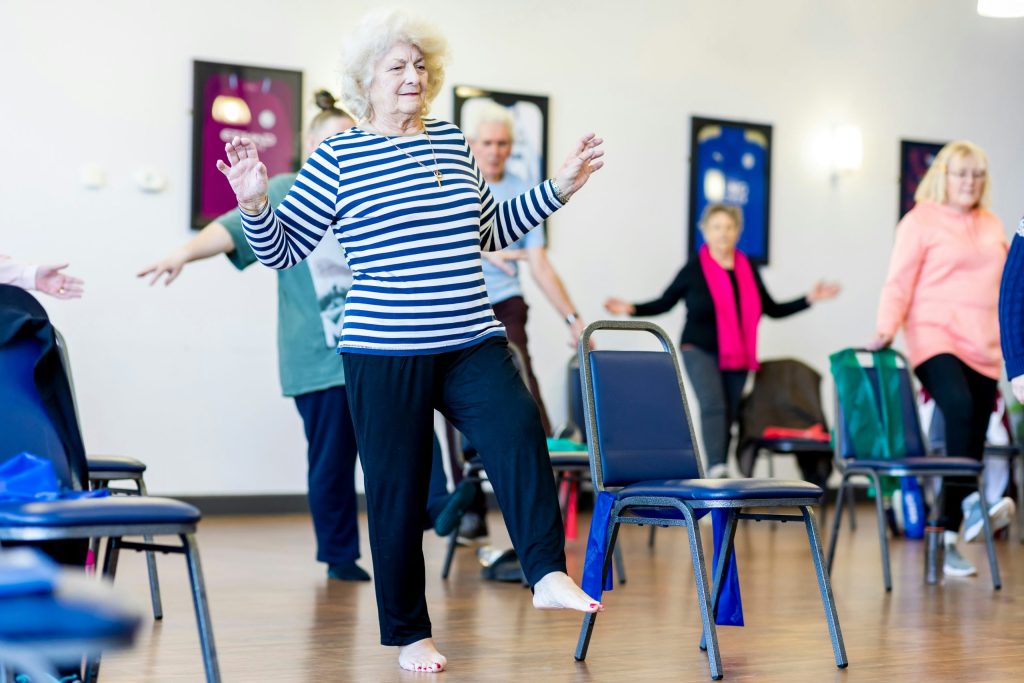
As we age, maintaining balance becomes crucial to preventing falls and sustaining independence. Whether you’re a caregiver or an older adult looking to enhance stability, these balance drills are designed to strengthen muscles and improve coordination. Let’s explore seven effective exercises that can help keep you safe and steady on your feet!
1. Single-Leg Stand – Best For Building Core Stability
The Single-Leg Stand is a fundamental exercise that targets your core and leg muscles. By standing on one leg, you enhance stability while engaging muscles that support balance.
Key Features:
- Engages core and lower body muscles
- Improves proprioception
- Can be modified for increased difficulty
Pros:
- Easy to perform anywhere
- No special equipment needed
- Simple for beginners
Cons:
- May be challenging for some at first
- Requires supervision for very frail individuals
2. Heel-to-Toe Walk – Best For Enhancing Coordination
Performing the Heel-to-Toe Walk helps improve coordination and balance. This drill mimics walking in a straight line, which is essential for preventing falls while walking.
Key Features:
- Enhances coordination
- Improves walking stability
- Can be performed indoors or outdoors
Pros:
- Effective in building confidence
- Requires minimal space
- Easy to integrate into daily routines
Cons:
- May take practice to master
- Not suitable for those with severe balance issues
3. Tai Chi – Best For Improving Flexibility and Strength
Tai Chi is an ancient Chinese martial art focused on slow, controlled movements. It’s excellent for enhancing balance, flexibility, and strength, making it a perfect choice for older adults.
Key Features:
- Promotes relaxation and mindfulness
- Improves muscle strength
- Can be practiced in groups
Pros:
- Low-impact exercise
- Enhances mental well-being
- Can be practiced at any fitness level
Cons:
- Requires regular practice for benefits
- May need guidance from a qualified instructor
4. Stability Ball Exercises – Best For Full-Body Engagement
Using a stability ball can dramatically improve balance by engaging your core, legs, and arms simultaneously. It’s versatile and offers varied levels of difficulty.
Key Features:
- Engages multiple muscle groups
- Enhances coordination and balance
- Adjustable intensity based on skill level
Pros:
- Fun alternative to traditional exercises
- Great for home workouts
- Encourages muscle engagement
Cons:
- May require a learning curve
- Not suitable for those with severe mobility issues
5. Side Leg Raises – Best For Strengthening Hip Muscles
Side Leg Raises specifically target the hip muscles, which play a crucial role in maintaining balance. Strong hip muscles help in improving stability while walking or standing.
Key Features:
- Targets hip abductors
- Strengthens leg muscles
- Can be performed while seated or standing
Pros:
- Simple and effective
- Easy to modify for increasing difficulty
- Minimal risk of injury
Cons:
- May need assistance for those with limited mobility
- Can get boring if repetitive
6. Chair Stand – Best For Building Leg Strength
The Chair Stand exercise helps to build leg strength, which is crucial for transitioning from sitting to standing—a common challenge for older adults.
Key Features:
- Improves leg strength and endurance
- Enhances functional mobility
- Can be performed with or without weights
Pros:
- Simple to execute
- Encourages independence
- Suitable for varying fitness levels
Cons:
- Requires a stable chair
- May strain knees if done improperly
7. Marching in Place – Best For Enhancing Leg Coordination
Marching in place is a simple yet effective exercise that helps enhance leg coordination and balance. It mimics the act of walking without the risk of falling.
Key Features:
- Improves leg coordination and strength
- Easy to increase intensity
- Engages core muscles
Pros:
- Requires no equipment
- Can be done anywhere
- Great warm-up or cool-down exercise
Cons:
- May feel dull after extended periods
- Needs supervision for those with severe balance issues
How to Choose the Right Balance Drills
When selecting balance drills, consider individual fitness levels, physical capabilities, and any existing health concerns. Start with basic exercises and gradually increase intensity as strength and balance improve. Consult with a healthcare provider or fitness trainer if you’re uncertain about which exercises suit your specific needs.
#BalanceTraining #FallPrevention #SeniorFitness #HealthyAging #ExerciseForSeniors #ActiveLifestyle #TaiChi #StabilityExercises