

Ever wondered how stars are born, evolve, and meet their fiery end? Stellar evolution is a captivating journey that takes billions of years, transitioning from the beauty of a nebula to the explosive end of a supernova. Understanding this process not only fuels our fascination with the cosmos but also sheds light on the very origins of the elements that make up our universe.
In this article, we will explore the 10 essential stages of stellar evolution, revealing what happens at each phase and why they are significant. So grab your telescope (or at least your curiosity) and join us on this stellar journey!
1. Nebula – The Birthplace of Stars
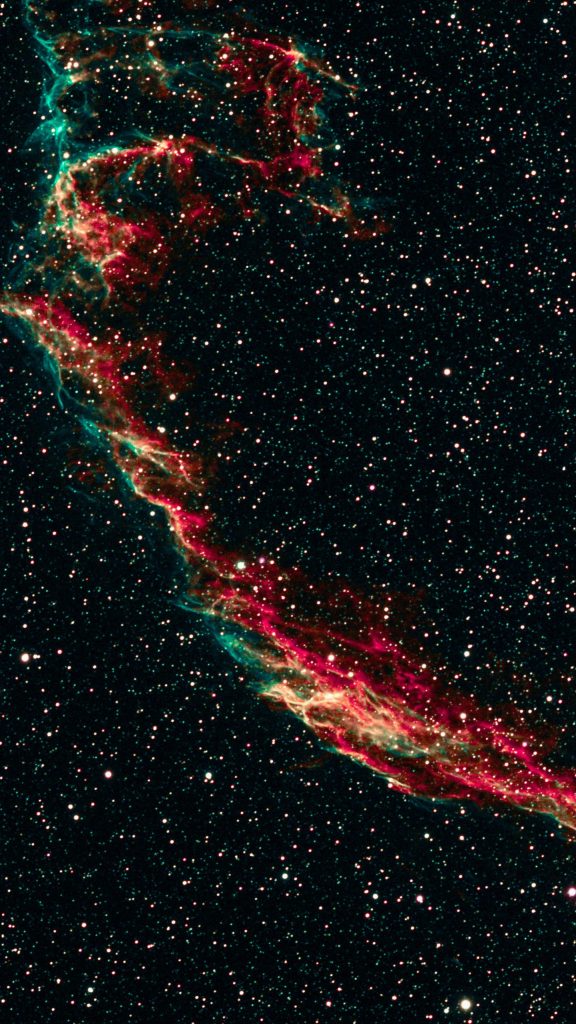
The journey begins in a nebula, a vast cloud of gas and dust, where gravity plays its magic. Here, denser regions begin to collapse under their own gravity, leading to the formation of stars.
Key Features:
- Large clouds of gas and dust
- High potential for star formation
- Rich in hydrogen and helium
Pros:
- Critical for new star development
- Can contain multiple star systems
- Visible in the night sky as beautiful bright patches
Cons:
- Highly unstable environments
- Massive size makes them hard to study
- Not all nebulae lead to star formation
2. Protostar – The Star’s Infant Stage
Once enough gas has collapsed, a protostar forms, and temperatures rise, initiating nuclear fusion. This is where the star begins its life, glimmering faintly as it collects more mass.
Key Features:
- Formation in a rotating disk of material
- Temperature increase due to gravitational pressure
- Sign of future stellar activity
Pros:
- Initial phase of star growth
- Can accumulate surrounding material for increased mass
- Visible in various infrared wavelengths
Cons:
- Fainter than fully formed stars
- Potential disruption from nearby protostars
- Short-lived compared to other stages
3. Main Sequence Star – The Stable Adult Phase
The protostar evolves into a main sequence star like our Sun. This is the longest and most stable phase of a star, where nuclear fusion of hydrogen into helium occurs at its core.
Key Features:
- Hydrogen fusion sustains energy
- Stable state lasting billions of years
- Characteristic position on the Hertzsprung-Russell diagram
Pros:
- Supports planetary systems
- Predictable lifecycle
- Where most stars spend the majority of their lifetime
Cons:
- Limited to a certain mass range
- Past the midpoint, can become unstable
- Not all stars will shine equally
4. Red Giant – The Expanding Phase
As hydrogen in the core diminishes, the star expands and cools, becoming a red giant. This phase is marked by the star’s outer layers puffing out, creating a stunning visual spectacle.
Key Features:
- Core temperature rises, leading to helium fusion
- Significant increase in size
- Outer layers become less dense and cooler
Pros:
- Can lead to the formation of planetary nebulae
- Heavy element generation
- Visually spectacular in the night sky
Cons:
- Instability can lead to mass loss
- Short-lived phase before the next transformation
- May not occur for all star types
5. Planetary Nebula – The Stellar Aftermath
Once the outer layers have been shed, the remaining core remains as a hot white dwarf, while the ejected gas forms a planetary nebula. This stage beautifully showcases the remains of a star’s life.
Key Features:
- Showcases stellar death through colorful gas clouds
- Often contains bright, glowing shells
- Visible in various spectra
Pros:
- Contributes to the interstellar medium
- Rich in elements vital for new star and planet formation
- Visually captivating for astronomers
Cons:
- Relatively short-lived phase
- Not universally observed in all stellar life cycles
- Fading brightness over time
6. White Dwarf – The Cooling Remnant
The white dwarf is the remaining core of a low to medium-mass star, incredibly dense and slowly cooling over billions of years. It’s the final life stage for stars that do not explode.
Key Features:
- Extremely dense, made mostly of carbon and oxygen
- Gradually cools and dims over time
- Stellar remnants of what was once a larger star
Pros:
- Estimates provide insights into stellar evolution
- Form the eventual progenitors of planetary nebulae
- Part of the potential for future astronomical studies
Cons:
- Final fate of the star without further evolution
- Dimness may prevent observation
- Long timeline makes study challenging
7. Neutron Star – The Remnant Core
When massive stars exhaust their nuclear fuel, the core collapses into an incredibly dense neutron star. These cosmic objects are primarily composed of neutrons and showcase intense gravitational forces.
Key Features:
- Unbelievably dense; a sugar-cube-sized amount weighs as much as a mountain
- Highly magnetic and can emit beams of radiation
- Formed during supernova explosions
Pros:
- Provide significant insights into nuclear physics
- Some rotate rapidly, creating pulsars
- Offer clues about the universe’s evolution
Cons:
- Hard to detect and study
- Some are transient and can disappear quickly
- Exceedingly specific conditions for formation
8. Pulsar – A Cosmic Lighthouse
Pulsars are rapidly rotating neutron stars that emit beams of radiation, acting like cosmic lighthouses. Their regular pulses have proven valuable for studying the universe.
Key Features:
- Emit radiation at regular intervals
- Observed as quasars or X-ray binaries
- Provide precise timing measurements
Pros:
- Critical for understanding the behavior of matter at extreme densities
- Used as cosmic clocks in various studies
- Aid in detecting gravitational waves
Cons:
- Limited lifespan as neutron stars
- Can be difficult to locate
- Potentially inaccurate wobbling signals over time
9. Black Hole – The Ultimate Collapse
For massive stars, the end of their life culminates in a black hole, where gravity is so strong that nothing can escape from it. This mysterious stage captivates scientists and astronomers alike.
Key Features:
- End stage for the most massive stars
- Image formation through gravitational lensing
- Event horizon defines the point of no return
Pros:
- Test theories of general relativity
- Inspire many scientific inquiries about the universe
- May hold keys to dark matter understanding
Cons:
- Inaccessible for direct study
- Interactions can become violent and destructive
- Data often inferred rather than directly observed
10. Supernova – The Grand Finale
Supernovae are the explosive deaths of stars, marking the grand finale of their life cycle. This mighty explosion creates heavy elements essential for life and scatters stellar materials across the universe.
Key Features:
- Can briefly outshine entire galaxies
- Essential for dispersing heavy elements
- Triggers the formation of new stars and planets
Pros:
- Contributes to the recycling of cosmic material
- Key to understanding the life cycle of stars
- Obvious markers of past stellar lives
Cons:
- Can be destructive in surrounding regions
- Studying them requires extensive resources
- Complex models needed to understand their mechanisms
How to Choose the Best Stellar Event to Observe
When deciding which stage of stellar evolution to study or observe, consider factors such as visibility from your location, available technology (such as telescopes or imaging software), and the specific features you’re interested in. Each stage carries unique characteristics and contributions to our understanding of the cosmos. Whether you are an amateur astronomer, an educator, or a space enthusiast, staying curious will help you unlock the secrets of the universe.
#StellarEvolution #Astrophysics #AstronomyLovers #CosmicJourney #StarFormation #Supernova #Nebula #NeutronStar